M-Pecunia • Updated 6/13/2026
Author email: officialmpecunia@gmail.com
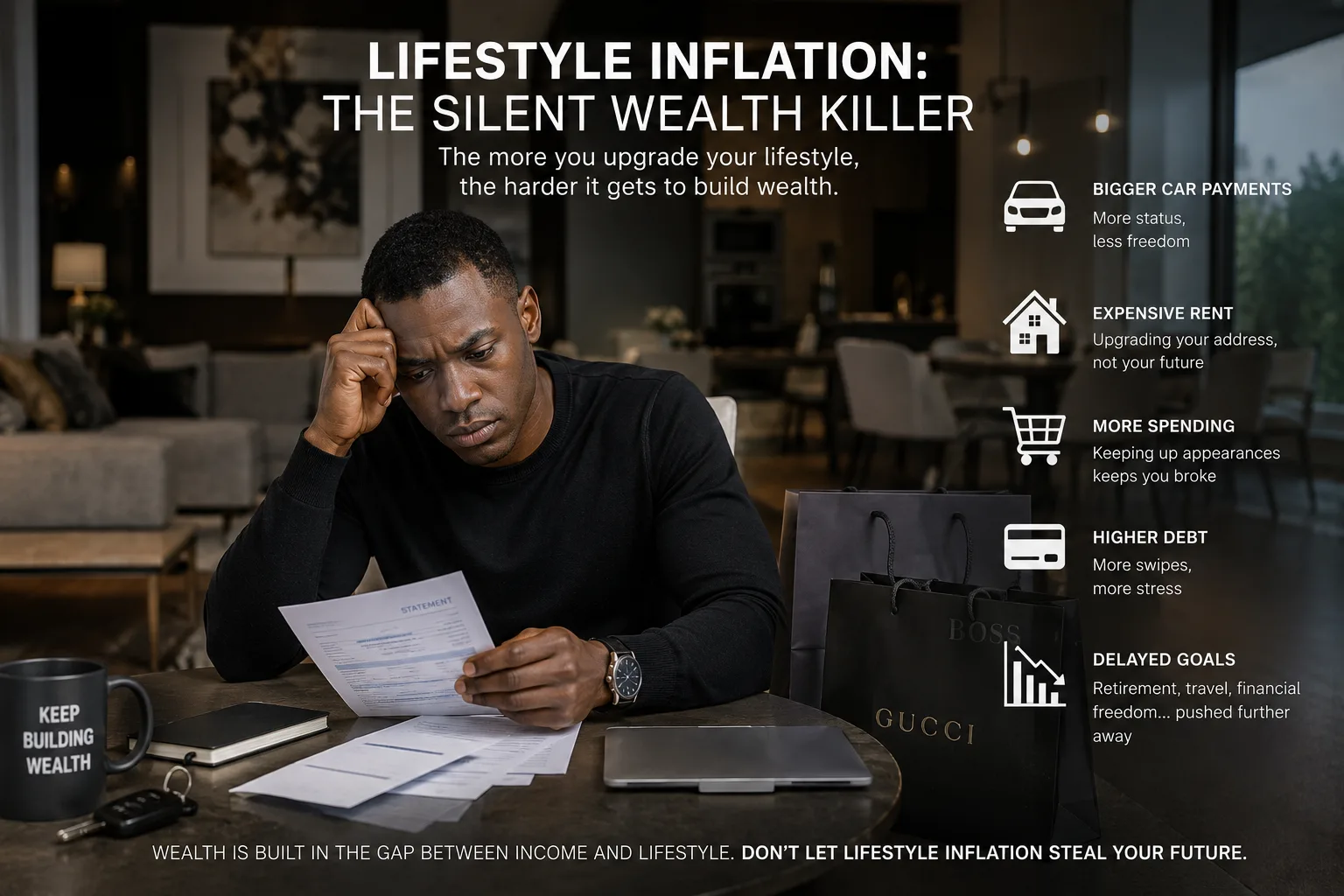
Lifestyle Inflation: The Silent Wealth Killer.
Why Lifestyle Inflation is costing you much more than you can think!
This article has been written by The Financial Literacy Foundation Kenya Instagram: @tflfk254 Website: www.flfk.co.ke
37 views
You finally got the promotion.
Your salary increased. Your phone suddenly looks old. Your car no longer feels impressive. The neighbourhood you live in seems less attractive, and somehow, the restaurants you used to enjoy now feel "too ordinary."

Sound familiar?
Welcome to the world of lifestyle inflation; the silent wealth killer.
Lifestyle inflation happens when your spending increases every time your income increases. Instead of using additional income to build wealth, save, invest, or reduce debt, you upgrade your lifestyle. While treating yourself occasionally is perfectly fine, constantly increasing your expenses can leave you feeling financially stuck despite earning more money than ever before.
Imagine two friends, James and Brian.
Both receive a salary increase of KSh 30,000 per month.
James immediately upgrades his car, moves to a more expensive apartment, subscribes to more streaming services, and starts dining out more often. By the end of the month, every shilling of his salary increase is gone.
Brian also celebrates his promotion. He upgrades a few things that genuinely improve his quality of life but directs most of the extra income into investments, savings, and an emergency fund.
Five years later, James earns a decent salary but still lives paycheque to paycheque. Brian has built a financial cushion, investment portfolio, and peace of mind.

The difference isn't income. It's behaviour.
One of the biggest reasons lifestyle inflation is so dangerous is that it often feels deserved. After all, you've worked hard. You've earned the promotion. Why shouldn't you enjoy the fruits of your labor?
This is where one of the key lessons from Atomic Habits becomes relevant: small decisions repeated consistently create remarkable results over time.
Many people assume wealth is built through a single big investment or a sudden financial breakthrough. In reality, wealth is often the result of small habits repeated month after month. Saving KSh 5,000 consistently may not seem exciting today, but over years it can produce life-changing results.
James Clear writes that we do not rise to the level of our goals; we fall to the level of our systems. In personal finance, this means that wanting to be wealthy is not enough. What matters is having systems that automatically help you save, invest, and manage money wisely.
For example:
• Automate savings immediately after payday.
• Invest a fixed percentage of your income every month.
• Review your spending regularly.
• Avoid impulse purchases by introducing a 24-hour waiting period.
Another powerful lesson from Atomic Habits is the idea of identity.
Instead of saying, "I want to save more money," start saying, "I am the kind of person who makes wise financial decisions."
Instead of asking, "Can I afford this?" ask, "Is this what a financially disciplined person would do?"
The more your habits align with the person you want to become, the easier it becomes to resist unnecessary lifestyle upgrades.
Social media doesn't help either. Every day we're exposed to people seemingly living perfect lives; vacations, designer clothes, fancy dinners, and luxury cars. The pressure to keep up can quietly push us into spending more than we need to.
Ironically, many people who look wealthy are not actually building wealth. Real wealth is often invisible. It lives in savings accounts, investment portfolios, retirement funds, businesses, and assets that generate future income.
To avoid lifestyle inflation, consider adopting the "1% better" principle from Atomic Habits. Each time your income increases, make one small improvement to your financial life. Increase your investments. Build your emergency fund. Learn a new financial skill. Pay off debt faster.
These small improvements may seem insignificant in the moment, but their impact compounds over time.
The next time your income grows, celebrate your success. Enjoy some of the rewards. But remember that wealth is not built by how much you earn; it is built by the habits you practice consistently.
Lifestyle inflation is silent. Wealth building is intentional.
The people who achieve lasting financial freedom are rarely those who make one spectacular financial decision. More often, they are the people who make hundreds of small, smart decisions over many years.
And that is a habit worth building!
Instagram: @tflfk254
Website: www.flfk.co.ke
Ratings & Comments
Loading engagement...